Rocketx bridge Is a practical cross-chain swap guide
Rocketx bridge Is a cross-chain swap experience for moving crypto assets between supported blockchain networks through one workflow. Instead of manually using separate bridges, decentralized exchanges, and wallets, a user can compare routes, review costs, approve a token, and submit a swap from one chain to another. The important point is that every bridge transaction still carries market, network, smart contract, and wallet-security risk, so details should be verified before signing.
Rocketx bridge is best understood as part of the broader move toward blockchain interoperability. Many crypto users hold assets on Ethereum, BNB Chain, Polygon, Arbitrum, Optimism, Avalanche, Solana-compatible environments, or other networks, and they often need a way to transfer value without first returning to a centralized exchange. A cross-chain swap interface tries to make that process less fragmented by bringing route discovery, token selection, and transaction confirmation into a single screen.
Rocketx bridge should not be treated as a guarantee that a transaction will be cheap, instant, or risk-free. It is a tool category that can simplify a difficult workflow, but the user still needs to check the token address, source chain, destination chain, wallet permissions, estimated output, gas requirements, and whether the receiving network is supported by the wallet. The safest mindset is deliberate: preview first, verify independently, then sign only what you understand.
What is Rocketx bridge?
Rocketx bridge is commonly searched by users who want to know whether RocketX can help them move tokens across chains or swap one asset for another without opening multiple apps. In plain language, a bridge connects separate blockchain ecosystems by coordinating liquidity, wrapped assets, messaging, or routing infrastructure. A swap adds exchange logic, so the starting asset and ending asset may be different as well as being on different networks.
Rocketx bridge sits in the same conceptual area as a bridge aggregator or cross-chain swap aggregator. That means the interface may look for available routes instead of forcing the user to pick a single bridge manually. A route can involve liquidity pools, decentralized exchange swaps, bridge contracts, relayers, or message-passing systems. The visible result is usually a quote that estimates how much of the destination token the user may receive after fees and network costs.
Rocketx bridge is useful because crypto assets are not automatically portable between chains. A token balance on one network is not the same thing as a token balance on another network, even if the ticker symbol looks identical. For example, a stablecoin on one chain may have a different contract address, issuer arrangement, liquidity depth, and withdrawal support than a similarly named stablecoin elsewhere. That is why contract verification matters.
Rocketx bridge content can sometimes be confused with companies or domains that share similar words, so users should be careful about intent. This article is an informational guide about the cross-chain swap topic and does not claim affiliation with any service. The official app, current supported chains, live fee rules, and wallet prompts are the details that matter most when a user is preparing an actual transaction.
How does Rocketx bridge work during a cross-chain swap?
Rocketx bridge generally follows a quote-and-confirm pattern. The user chooses a source network, a source token, a destination network, and the asset they want to receive. The interface then estimates one or more paths. Behind the scenes, a route may swap the input token into a bridgeable asset, transfer value through a bridge or liquidity network, and then swap again on the destination chain.
Rocketx bridge may require two wallet actions for some tokens. The first action is an approval, which grants a smart contract permission to use a specific token from the wallet. The second action is the actual swap or bridge transaction. Native gas tokens, such as ETH on Ethereum or BNB on BNB Chain, are handled differently from ERC-20 or BEP-20 style tokens because they are used to pay transaction fees directly.
The protocol path can vary depending on liquidity, token pair, chain congestion, minimum output settings, and the infrastructure available at the time of the quote. A route that looks attractive one minute may change if liquidity moves or gas prices spike. Rocketx bridge users should refresh quotes before signing and read the transaction preview instead of assuming that a previous estimate is still valid.
Rocketx bridge also depends on finality across networks. One chain may confirm quickly while another takes longer to recognize the completed transfer. During busy periods, a transaction may appear pending even though the wallet has broadcast it successfully. In practice, users should keep the transaction hash, avoid repeated submissions unless the interface clearly indicates failure, and check the relevant block explorer for status.
Why do people use Rocketx bridge instead of a manual bridge?
Rocketx bridge appeals to users who want fewer steps. A manual cross-chain workflow can require finding a bridge, confirming supported tokens, swapping before the bridge, waiting for settlement, changing wallet networks, and swapping again after arrival. Each step adds room for mistakes. A unified interface can reduce context switching and make it easier to compare the estimated destination amount before committing.
Rocketx bridge can also help when a user does not already know which bridge route supports a specific pair. For active DeFi users, moving assets between lending markets, decentralized exchanges, NFT marketplaces, gaming ecosystems, and yield strategies often means working across multiple chains. Aggregated routing is designed to answer a simple question: what path can get this asset from here to there with acceptable cost, speed, and slippage?
Rocketx bridge is not only about convenience. It can support portfolio rebalancing, moving stablecoins to a chain with lower fees, accessing a token that has deeper liquidity elsewhere, or preparing funds for a decentralized application on another network. Some users also bridge to avoid the delay of sending assets to a centralized exchange, trading there, and withdrawing back to a different chain.
In practice, the main benefit is visibility. Rocketx bridge gives the user a place to compare the input amount, estimated output, fees, route, and wallet action before the transaction is signed. That visibility is valuable, but it is only as good as the user’s review. If the token is unfamiliar, the contract address should be checked through trusted sources before any approval is granted.
How do you use Rocketx bridge step by step?
Rocketx bridge works best when the user prepares before connecting a wallet. Preparation includes knowing the exact token, the destination chain, and the reason for the transfer. It also means holding enough native gas on the source chain, and sometimes on the destination chain, to complete follow-up actions. A bridge transaction can deliver funds successfully while still leaving the user unable to move them if there is no gas on the receiving network.
Rocketx bridge users can think of the workflow as a careful review process rather than a single click. A typical sequence looks like this:
- Open the intended app location directly and confirm the URL before connecting a wallet.
- Select the source chain, destination chain, input token, output token, and amount.
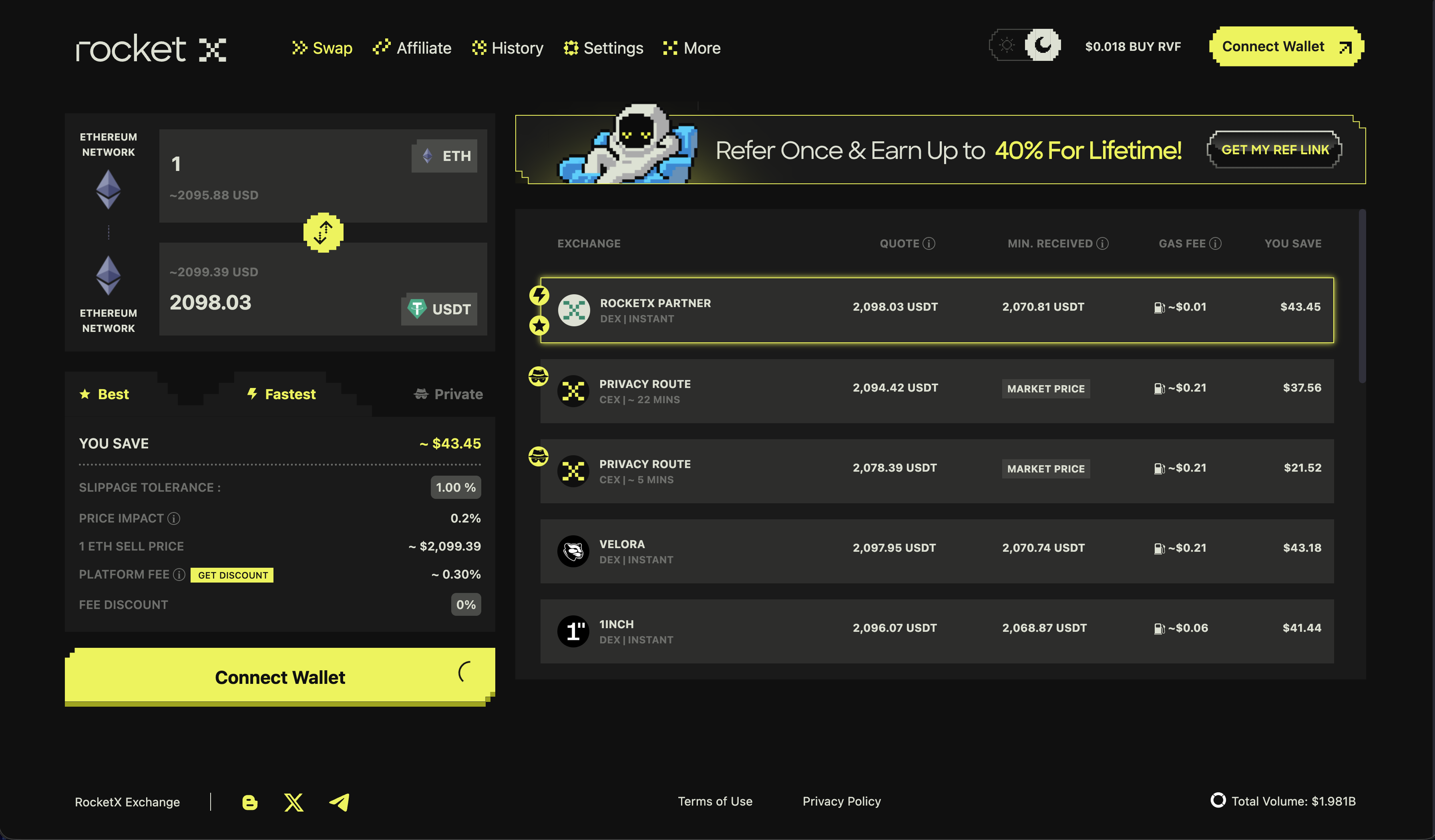
- Review the quote, route, estimated fees, slippage, minimum received amount, and expected time.
- Approve token spending only if the wallet prompt matches the intended token and amount.
- Submit the swap, save the transaction hash, and monitor the source and destination chains.
Rocketx bridge may show different prompts depending on the asset and chain. If an approval request asks for unlimited token access, users can decide whether that convenience is worth the additional permission risk. Some wallets and portfolio tools allow approvals to be reviewed or revoked later. For larger balances, many experienced users test with a small amount before transferring the full intended amount.
For a new user, patience is part of the workflow. Rocketx bridge transactions can involve several systems, and the destination asset may not appear instantly in the wallet interface. The token may need to be imported manually using the correct contract address. If the transaction appears complete on a block explorer but not in the wallet, the issue may be wallet display support rather than a failed transfer.
What fees and costs should Rocketx bridge users expect?
Rocketx bridge costs can include network gas, swap fees, bridge fees, liquidity provider fees, price impact, and slippage. The exact combination depends on the chosen route. Gas is paid to blockchain validators or sequencers, while swap and bridge fees may be embedded in the quote. Price impact occurs when the trade size is large relative to available liquidity, causing the final exchange rate to move against the user.
Rocketx bridge quotes should be read as estimates, not promises. Fast-moving markets can alter the output amount between quote generation and execution. Slippage settings define how much movement a user is willing to tolerate before a transaction fails or returns a lower amount than expected. A very loose slippage setting may complete more often but can expose the user to worse pricing.
Rocketx bridge users should compare the value of the transfer with the total cost of the route. Moving a small amount through an expensive chain can be inefficient if gas consumes a large share of the transfer. On the other hand, a slightly higher route fee may be acceptable if it is faster, more liquid, or avoids multiple manual transactions. The best choice depends on the user’s purpose, not just the headline fee.
The destination chain can introduce additional costs after the bridge completes. Rocketx bridge may get funds to the right network, but interacting with a decentralized exchange, lending protocol, or marketplace afterward will still require gas. Before bridging, users should ask whether they will have enough native token on the destination chain to perform the next action.
Is Rocketx bridge safe to use?
Rocketx bridge safety depends on several layers: the user’s wallet hygiene, the accuracy of the URL, the route selected, the smart contracts involved, the bridge infrastructure, and market conditions. No bridge can eliminate all risk. Cross-chain systems have historically been attractive targets because they coordinate value across different networks and may rely on complex messaging or liquidity mechanisms.
Rocketx bridge users should treat every wallet prompt as a security checkpoint. A normal transaction should match the intended chain, token, amount, and contract interaction. If a prompt looks unusual, asks for a token that was not selected, or appears after landing on a suspicious domain, the safest response is to reject it and investigate. Hardware wallets can add protection, but they do not replace careful review.
Rocketx bridge risk also includes phishing and fake support. Users should not share seed phrases, private keys, or screen-sharing access with anyone claiming to help complete a bridge. A legitimate transaction can be traced with a transaction hash; private recovery information is never needed for support. Bookmarking the official app and avoiding sponsored or misspelled search results can reduce exposure to lookalike sites.
Rocketx bridge is part of a wider DeFi environment where responsibility shifts heavily to the user. That can be powerful, but it means mistakes may be irreversible. The practical safety approach is to verify official sources, start small when uncertain, avoid unknown tokens, keep wallet approvals limited, and never bridge funds that cannot tolerate delay, loss, or unexpected fees.
How does Rocketx bridge compare with exchanges and other bridges?
Rocketx bridge differs from a centralized exchange because it is oriented around wallet-to-wallet movement rather than account custody. With a centralized exchange, the user may deposit from one chain, trade inside an account, and withdraw to another chain if the exchange supports it. That can be familiar, but it adds custody, identity, withdrawal limits, maintenance windows, and exchange-specific network support.
Rocketx bridge differs from a single-purpose bridge because it may focus on route selection across more than one source of liquidity or bridging path. A single bridge can be efficient for a supported asset and chain pair, especially when liquidity is deep. An aggregator-style experience can be useful when the user wants to compare possibilities or when the best route is not obvious.
Rocketx bridge also overlaps with decentralized exchange aggregators, but the cross-chain element makes the workflow more complex. A normal DEX swap usually starts and ends on the same network. A cross-chain swap needs to solve both exchange and transfer. That is why users often see extra steps, longer wait times, and more detailed route information than they would for a same-chain trade.
The right alternative depends on the situation. Rocketx bridge may be practical for self-custody users who want a direct multi-chain workflow. A centralized exchange may be simpler for users who already maintain an account and need fiat ramps or order-book trading. A native bridge may be preferred when a specific ecosystem recommends it for canonical assets. Each option has tradeoffs.
What should you verify before using Rocketx bridge?
Rocketx bridge decisions should be based on current information. Supported chains, route partners, token availability, minimum transfer amounts, and fee models can change. Before using any cross-chain swap, users should verify details with official sources and the wallet prompt itself. A guide can explain the workflow, but it cannot confirm the live state of a route at the moment a transaction is signed.
Rocketx bridge users should pay special attention to token identity. Many assets share tickers, and scam tokens often imitate popular names. The contract address, issuer information, liquidity, and destination-chain support matter more than the symbol. If a token was found through social posts, private messages, or promotional comments, it deserves extra scrutiny before any wallet approval is granted.
Rocketx bridge preparation also includes operational checks. Confirm that the wallet supports both networks, that the destination address is the same address format expected by the receiving chain, and that any exchange or protocol receiving the asset supports deposits on that exact network. Sending a bridged asset to a platform that does not support the destination chain can create recovery problems.
A useful internal learning path is to understand the difference between a and a . The terms are often used together, but they describe different pieces of the journey. Rocketx bridge can combine them in one route, which is convenient, but the user still benefits from knowing which part of the transaction is exchange and which part is transfer.

When does Rocketx bridge make the most sense?
Rocketx bridge makes sense when a user has a clear destination and wants a self-custody route between chains. It is especially relevant when funds need to reach a decentralized application, a cheaper network, or a chain where the desired asset has better utility. The strongest use case is practical movement, not speculation about price performance or guaranteed yield.
Rocketx bridge can also be useful for users who frequently operate across multiple ecosystems and want a repeatable process. The benefit grows when the alternative would require several manual swaps and bridge visits. Still, repeat users should avoid becoming casual about approvals and transaction previews. Familiarity can make mistakes more likely if a route changes or a token address is wrong.
Rocketx bridge is less suitable when the user does not understand the destination chain, cannot verify the token, or is trying to act under time pressure. A rushed bridge is a common setup for errors. If the amount is meaningful, waiting to confirm the app URL, reading the route, checking fees, and testing a smaller transfer can be more valuable than saving a few minutes.
Rocketx bridge ultimately represents the promise and responsibility of multi-chain crypto. It can make movement between networks more accessible, but it does not remove the need for judgment. Users who treat the interface as a decision tool, rather than a magic button, are better positioned to manage cost, timing, and security. Verify live details, keep records, and sign only the transactions that match your intent.
Questions and Answers
What is Rocketx bridge used for?
Rocketx bridge is used to understand or perform cross-chain swap workflows, where a user moves value from one blockchain network to another and may also exchange one token for another. It is relevant for people who use multiple chains, decentralized exchanges, wallets, and DeFi applications. Users should still verify supported chains, token addresses, fees, and wallet prompts with official sources before signing transactions.
How does Rocketx bridge differ from a normal token swap?
A normal token swap usually exchanges assets on the same blockchain network, while Rocketx bridge refers to a cross-chain process that can include both bridging and swapping. The route may move funds through bridge infrastructure, liquidity pools, or decentralized exchange paths. Because more systems are involved, users should expect more variables, including gas costs, slippage, confirmation time, and destination-chain wallet support.
Is Rocketx bridge safe for beginners?
Rocketx bridge can be approachable for beginners if they move slowly and verify each step, but cross-chain transactions are not risk-free. Beginners should confirm the correct app URL, use a trusted wallet, check token contracts, review approvals, and start with a small test amount when uncertain. No guide can guarantee safety because bridge infrastructure, smart contracts, phishing risk, and market conditions can change.
What fees can apply when using Rocketx bridge?
Fees may include source-chain gas, destination-chain costs, swap fees, bridge fees, liquidity provider costs, price impact, and slippage. The quote shown before signing is usually an estimate based on current routing and liquidity. Users should compare the expected output with the total cost, especially for small transfers where gas can consume a large percentage of the amount being moved.
Why might a Rocketx bridge transaction take longer than expected?
A Rocketx bridge transaction can take longer because it may involve confirmation on the source chain, routing through bridge or liquidity infrastructure, and recognition on the destination chain. Network congestion, route design, gas settings, and finality requirements can all affect timing. Users should keep the transaction hash and check relevant block explorers before assuming a transaction has failed.
What should I check before approving a token for Rocketx bridge?
Before approving a token, check that the wallet prompt matches the intended token, chain, app, and spending amount. Be cautious with unlimited approvals, especially for unfamiliar assets. Confirm the token contract through trusted sources and reject prompts that appear unexpectedly. After using DeFi apps, users can review and revoke old approvals with wallet or blockchain tools that support permission management.
Can Rocketx bridge guarantee the amount I will receive?
Rocketx bridge cannot guarantee a final amount in all conditions because quotes can be affected by market movement, slippage, liquidity changes, and network fees between preview and execution. The minimum received amount and route details are more important than the headline estimate. Users should refresh quotes, use sensible slippage settings, and avoid signing if the transaction preview does not match their expectations.